
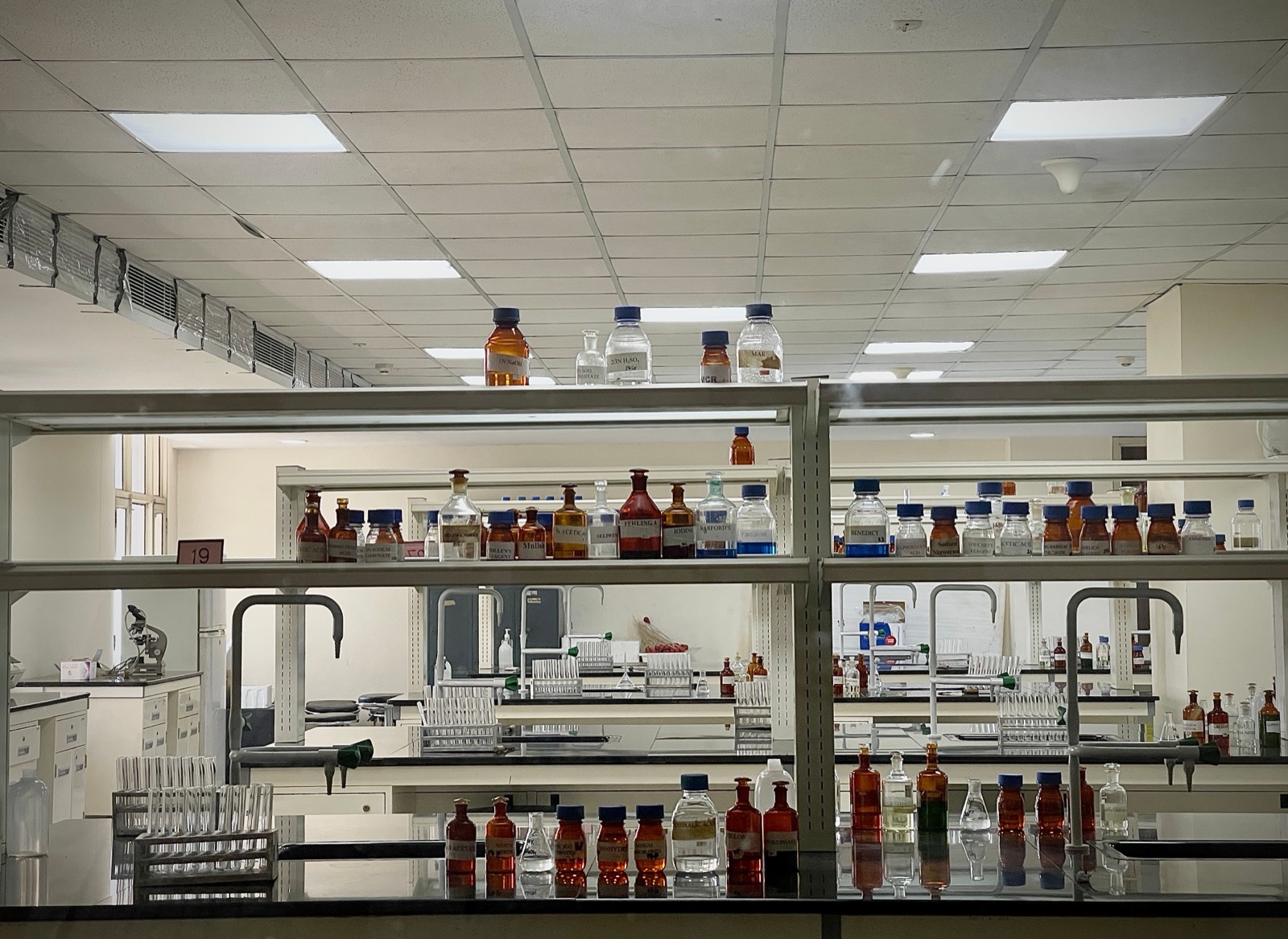
Laboratory Air Quality and VOC Monitoring System
Case Study:Laboratory Air Quality and VOC Monitoring System
A university deployed a comprehensive air quality monitoring system inside its research building, integrating multi-parameter gas sensors, particulate sensors and several HT-Nova’s detection modules to study the relationship between laboratory activities and changes in air quality.
Multi-sensor deployment:
VOC sensors, PM2.5/PM10 particulate sensors, temperature and humidity sensors and gas detection modules were installed at multiple locations within the laboratory to continuously monitor key pollutants. Additional Raman analytical modules were positioned at key points to perform qualitative analysis of specific samples or emissions.
Real-time monitoring:
All sensors transmit data to the laboratory management platform in real time. Researchers can observe air quality trends, VOC fluctuations and environmental parameter changes during experiments, allowing data-driven evaluation of laboratory activities.
Research analysis:
Through comprehensive analysis of real-time data, research teams can study how various experimental operations influence air quality, providing reliable insights for laboratory safety management and indoor environmental assessment.
Safety enhancement:
If VOCs or hazardous gas concentrations rise abnormally, the system immediately issues alerts, helping reduce potential safety risks in the laboratory.