
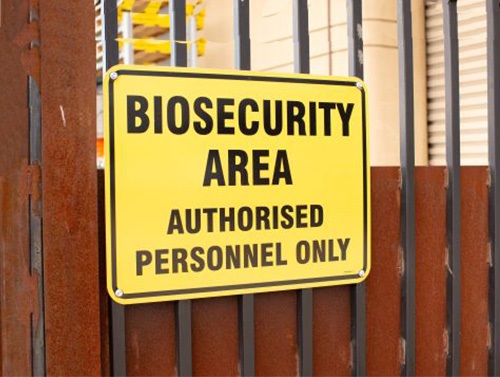
Operational scenario

On-Site Sampling and Analysis of Suspicious Biological Materials

A suspicious-biological-material response protects the scene, documents the item and transfers controlled samples through a defined chain of custody.

On-Site Sampling and Analysis of Suspicious Biological Materials
Controlled biological sampling with documented chain of custody.
Operational context

An unknown powder, liquid or biological-looking material in an occupied building can create concern before its nature is known. The responsible team establishes isolation, exposure information, PPE and a sampling plan before approaching the material.

HT-Nova biological sampling and portable field-support equipment can assist trained teams in collecting and documenting material for qualified analysis.

Operational challenge

Operational challenge

Unsafe handling can spread material, expose responders or compromise evidence. Visual appearance and rapid non-specific screening cannot establish organism identity or biological hazard on their own.

Operating workflow

Operating workflow

01

Define the baseline

Characterize normal particle behaviour for the location, occupancy pattern, ventilation state and season.

02

Monitor

Use continuous sensing to identify a significant change in biological-particle characteristics, not to claim a pathogen identity.

03

Collect

Trigger targeted sampling with controlled collection media, location records and contamination precautions.

04

Analyse

Transfer samples to an appropriate laboratory workflow for organism-specific or molecular identification.

05

Interpret

Combine sensor trends, environmental context and laboratory evidence before escalating or closing the event.

Technology role

Technology role

Controlled collection media, documented sample location and sealed transfer preserve material for laboratory analysis. Bioaerosol monitoring may support assessment of airborne-particle change when relevant, while organism identification belongs to a validated laboratory method.

Technical boundaries

Technical boundaries

The workflow requires authority-approved biosafety, PPE, decontamination, packaging, transport and chain-of-custody procedures. Field sampling does not by itself eliminate the hazard or prove the building safe.

Mission value

Mission value

01

Protected collection

Sampling begins only after isolation, PPE and contamination controls are defined.

02

Preserved sample identity

Location, collector, time, packaging and transfer remain documented.

03

Laboratory-ready evidence

Material reaches an appropriate analytical pathway without overstating field certainty.

Talk to an expert

Discuss your detection requirements.

Tell us about your environment, target substances and operational requirements. We’ll help map the right path.

Start a conversation