
Introduce
A defined sample volume is collected, conditioned and transferred into the carrier stream. Repeatable sampling protects both retention time and quantitative accuracy.
Gas chromatography separates a complex sample into individual chemical components before they are measured. This separation step gives analysts a clearer basis for identifying and quantifying volatile and semi-volatile compounds in laboratory, mobile and field-deployable systems.
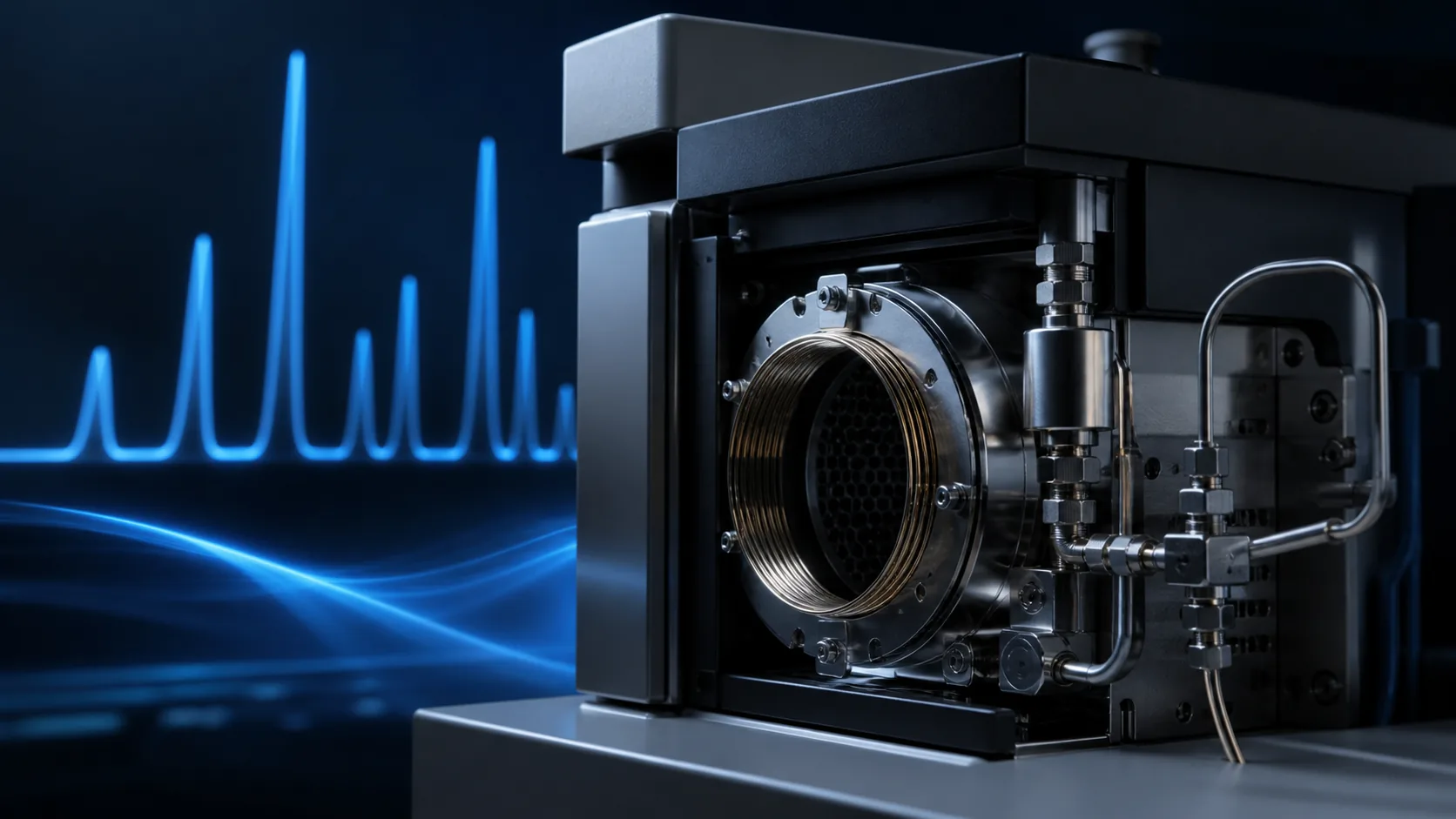
Gas chromatography separates a complex sample into individual chemical components before they are measured. This separation step gives analysts a clearer basis for identifying and quantifying volatile and semi-volatile compounds in laboratory, mobile and field-deployable systems.
A prepared sample is introduced into a heated inlet, where volatile constituents enter a carrier-gas stream. The carrier transports the sample through a column coated or packed with a stationary phase.
Each compound interacts differently with the stationary phase and therefore travels through the column at a different rate. The time between injection and detection - the retention time - provides an important identification characteristic, while the detector response can support concentration measurement.
A chromatogram is only as reliable as the complete method behind it. Column chemistry, temperature programme, carrier-gas control, sample preparation, detector selection and reference data must be matched to the target compounds and operating environment.
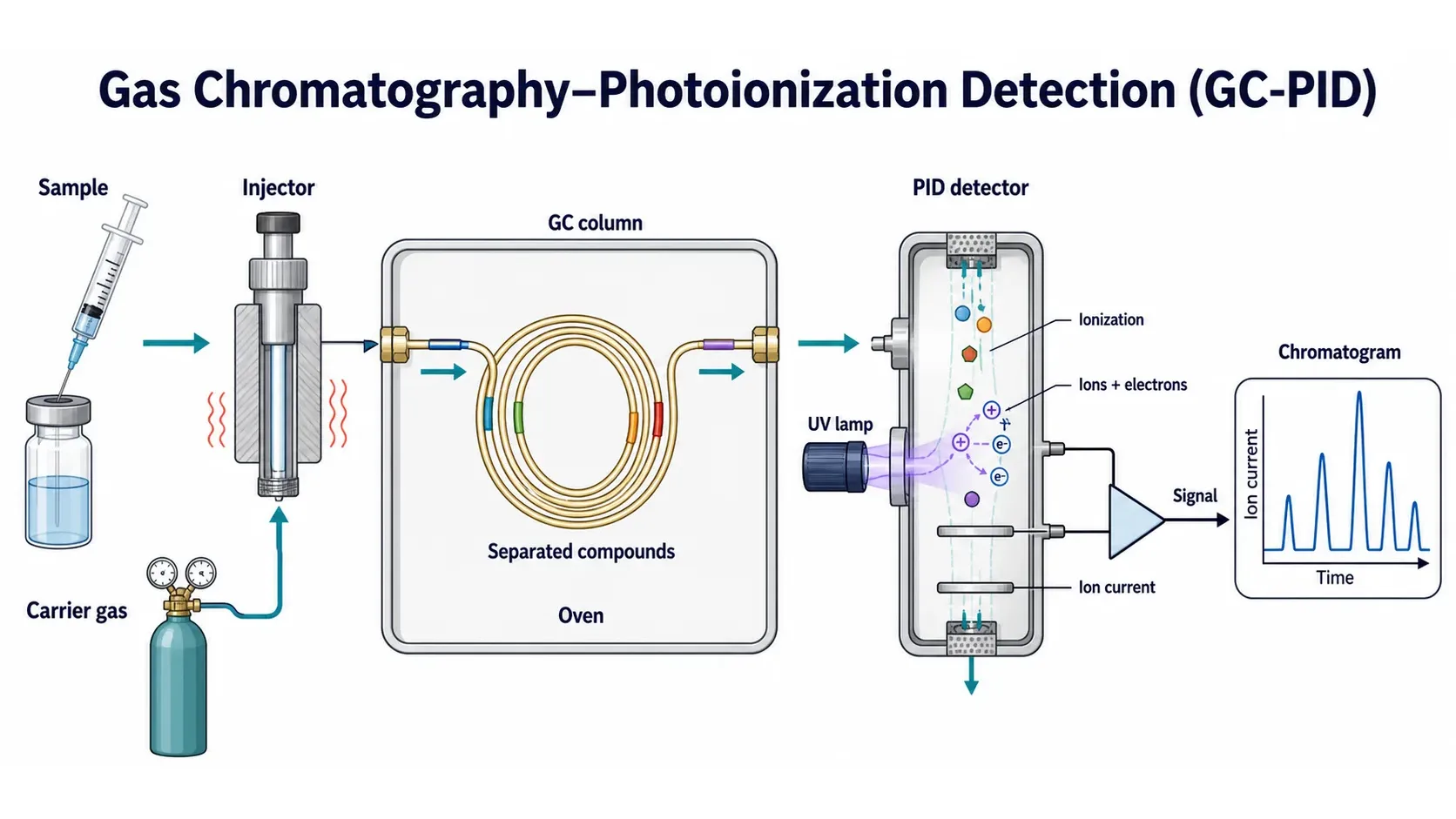
Gas chromatography combines precise fluid handling, thermal control and signal interpretation. The separation produced by the column allows the detector and software to evaluate compounds one after another instead of as an unresolved mixture.
A defined sample volume is collected, conditioned and transferred into the carrier stream. Repeatable sampling protects both retention time and quantitative accuracy.
The column and temperature programme separate compounds according to volatility and interaction with the stationary phase. Method selectivity determines which mixtures can be resolved.
Separated compounds pass through a suitable detector such as PID, FID or mass spectrometry. Detector choice sets the sensitivity, selectivity and information available for interpretation.
Software evaluates peak position, area and shape against calibrated methods and reference data. The result links chromatographic evidence to an identification or concentration report.
Field and process GC systems must preserve laboratory disciplines inside a smaller, more autonomous instrument. Stability, calibration and method design are as important as the detector itself.
Column phase, dimensions, flow and temperature profile must resolve the target compounds from expected interferents within the required analysis time.
Tubing, filters, traps and pre-concentration components can lose, transform or contaminate analytes. The sampling path must be designed and maintained as part of the analytical method.
Retention-time libraries, response factors, quality controls and peak-processing rules require traceable maintenance. Automated identification should retain the evidence needed for expert review.
Precise Component Differentiation: Gas Chromatography provides exceptional separation accuracy for complex chemical mixtures. Retention behaviour under a defined method helps distinguish compounds, but retention time is not universally unique and co-elution can occur. Identification confidence increases when reference standards or an information-rich detector such as mass spectrometry provide independent evidence.
Enhanced Analytical Specificity: By pairing GC with detectors such as PID or mass spectrometry, the system achieves highly selective analysis of volatile and semi-volatile compounds. This enables clear identification of hazardous chemicals, pollutants and industrial compounds with laboratory-grade precision.
Accurate Concentration Measurement: GC delivers highly reliable quantitative data, allowing precise measurement of chemical concentrations across a wide dynamic range. Its stable baseline, linear response and robust calibration make it suitable for both routine analysis and trace-level monitoring.
Sensitive Detection of Low-Concentration Compounds: With strong signal-to-noise performance, GC is capable of detecting low-level toxic industrial chemicals, environmental contaminants and hazardous gases. This sensitivity supports applications that require early-warning detection and high confidence in analytical results.
Adaptable System Integration: Gas Chromatography supports modular deployment and can be integrated into benchtop analyzers, portable instruments, vehicle-mounted laboratories and mobile emergency response units. Its flexibility enables GC to serve both fixed and field-based detection needs.
Compatibility with Advanced Analysis Technologies: GC can incorporate AI-based peak recognition and compound-matching algorithms to accelerate interpretation and reduce operator workload. It also integrates seamlessly with HT-Nova’s multisensor platforms, including IMS, Raman, fluorescence and electrochemical modules, to create comprehensive multi-threat detection systems.
Tell us about your environment, target substances and operational requirements. We’ll help map the right path.
Start a conversation