
进样
采集规定体积的样品,经处理后转移至载气流中。可重复的进样过程同时保障保留时间和定量准确性。
气相色谱在测量之前先把复杂样品分离为单个化学组分。分离过程为挥发性与半挥发性化合物的鉴定和定量提供更清晰的依据,可用于实验室、移动平台及现场部署系统。
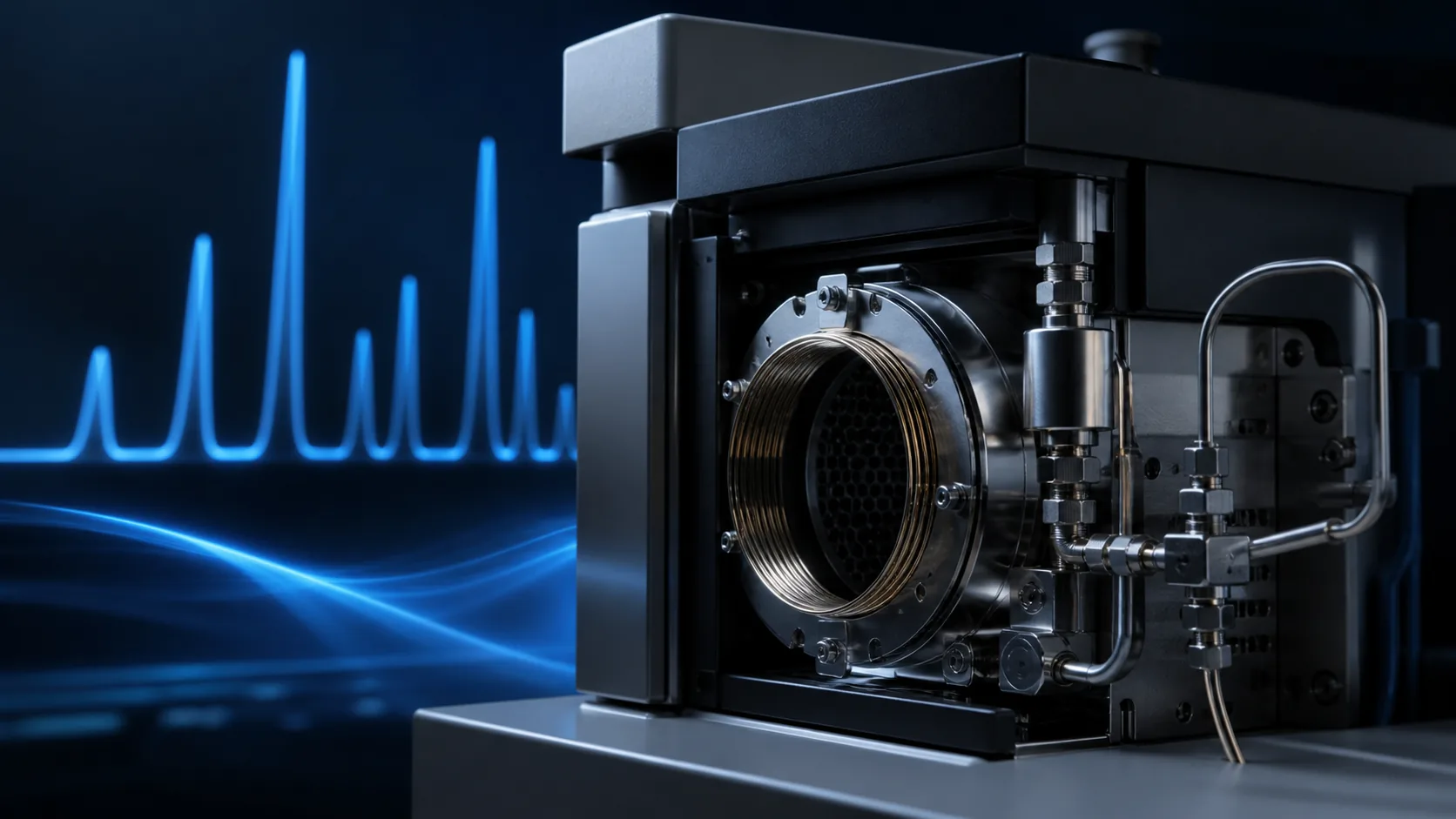
气相色谱在测量之前先把复杂样品分离为单个化学组分。分离过程为挥发性与半挥发性化合物的鉴定和定量提供更清晰的依据,可用于实验室、移动平台及现场部署系统。
经过处理的样品被引入加热进样口,挥发性组分进入载气流并被带入涂覆或填充固定相的色谱柱。
不同化合物与固定相的相互作用不同,因此通过色谱柱的速度也不同。从进样到检测的时间-保留时间-是重要的鉴定特征,而检测器响应则可用于浓度测量。
色谱图的可靠性取决于完整分析方法。柱化学性质、温度程序、载气控制、样品处理、检测器选择及参考数据都需要与目标化合物和使用环境相匹配。
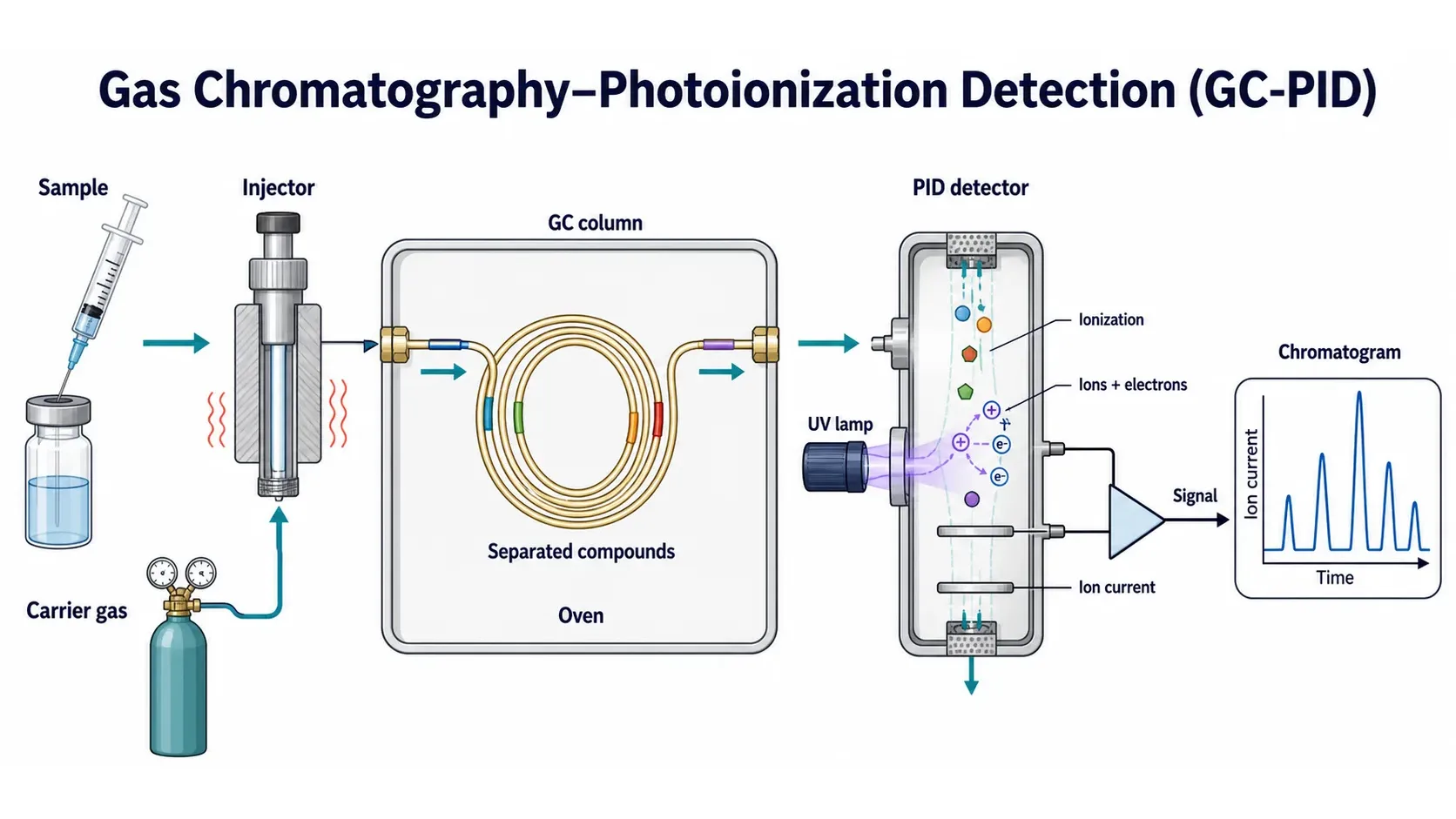
气相色谱把精密流体控制、温度控制和信号解释结合起来。色谱柱产生的分离使检测器和软件能够依次分析各个化合物,而不是面对未分辨的混合信号。
采集规定体积的样品,经处理后转移至载气流中。可重复的进样过程同时保障保留时间和定量准确性。
色谱柱与温度程序根据挥发性及化合物与固定相的相互作用进行分离,方法选择性决定可分辨的混合物范围。
分离后的化合物依次通过PID、FID或质谱等检测器,检测器选择决定灵敏度、选择性和可供解释的信息。
软件依据校准方法和参考数据分析峰位、峰面积与峰形,把色谱证据转化为鉴定或浓度报告。
现场及过程气相色谱系统需要在更小、更自主的仪器中保持实验室级分析规范。稳定性、校准和方法设计与检测器本身同样重要。
固定相、色谱柱尺寸、流量与温度程序需要在规定分析时间内把目标化合物与预期干扰物充分分离。
管路、过滤器、捕集器与预浓缩部件可能造成分析物损失、转化或污染,因此采样通道必须作为分析方法的一部分进行设计和维护。
保留时间库、响应因子、质量控制和峰处理规则需要可追溯维护,自动鉴定也应保留专家复核所需的证据。
Precise Component Differentiation: Gas Chromatography provides exceptional separation accuracy for complex chemical mixtures. Retention behaviour under a defined method helps distinguish compounds, but retention time is not universally unique and co-elution can occur. Identification confidence increases when reference standards or an information-rich detector such as mass spectrometry provide independent evidence.
Enhanced Analytical Specificity: By pairing GC with detectors such as PID or mass spectrometry, the system achieves highly selective analysis of volatile and semi-volatile compounds. This enables clear identification of hazardous chemicals, pollutants and industrial compounds with laboratory-grade precision.
Accurate Concentration Measurement: GC delivers highly reliable quantitative data, allowing precise measurement of chemical concentrations across a wide dynamic range. Its stable baseline, linear response and robust calibration make it suitable for both routine analysis and trace-level monitoring.
Sensitive Detection of Low-Concentration Compounds: With strong signal-to-noise performance, GC is capable of detecting low-level toxic industrial chemicals, environmental contaminants and hazardous gases. This sensitivity supports applications that require early-warning detection and high confidence in analytical results.
Adaptable System Integration: Gas Chromatography supports modular deployment and can be integrated into benchtop analyzers, portable instruments, vehicle-mounted laboratories and mobile emergency response units. Its flexibility enables GC to serve both fixed and field-based detection needs.
Compatibility with Advanced Analysis Technologies: GC can incorporate AI-based peak recognition and compound-matching algorithms to accelerate interpretation and reduce operator workload. It also integrates seamlessly with HT-Nova’s multisensor platforms, including IMS, Raman, fluorescence and electrochemical modules, to create comprehensive multi-threat detection systems.