
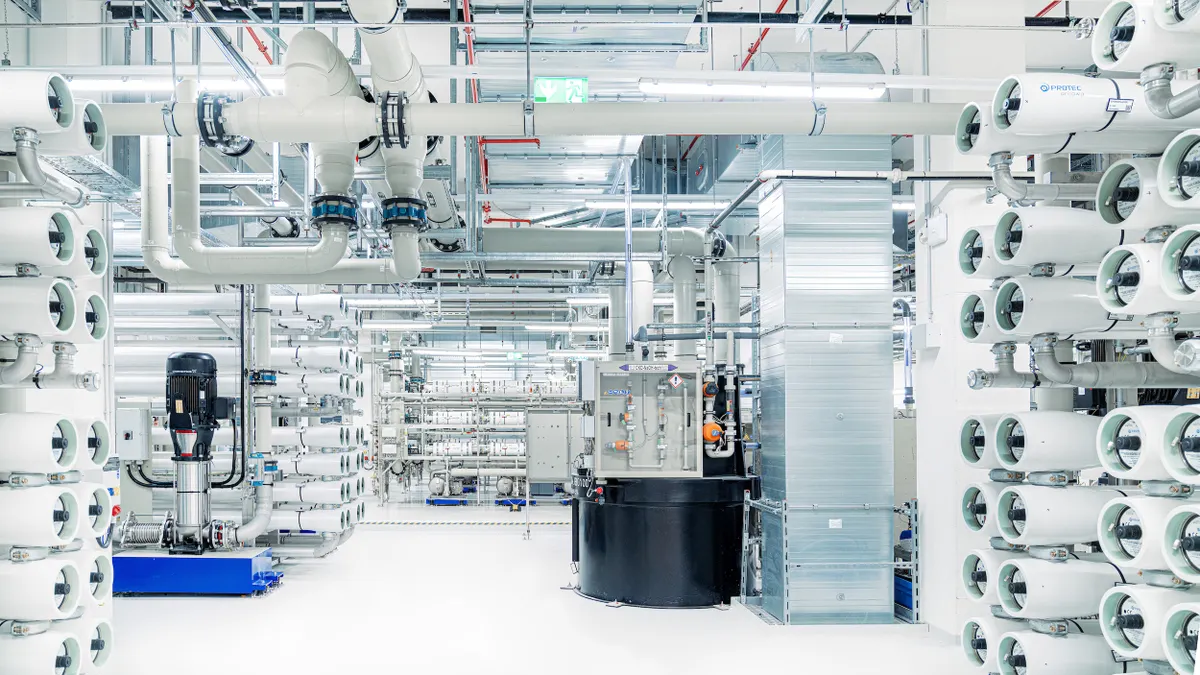
Operational scenario

Advanced Manufacturing Facility VOC and Chemical Safety Monitoring

An illustrative scenario for combining fixed and portable monitoring around chemical storage, process equipment and other risk locations in advanced manufacturing.

Industrial hygienist conducting portable VOC follow-up near process ventilation
Fixed VOC sensing with portable follow-up at a defined manufacturing risk point.
Operational context

Advanced manufacturing environments such as semiconductor facilities use solvents, specialty gases and process chemicals. A release or an abnormal reading can affect worker conditions, production continuity and process reliability, so monitoring needs to be connected to the facility's own operating controls.

This illustrative operating scenario combines fixed monitoring points around relevant locations with portable investigation when an abnormal reading is detected. The measurements support source isolation, corrective action and continued observation by the responsible facility teams; they do not replace process-safety management or site procedures.

Operational challenge

Monitor the process context, not only the alarm

A monitoring point becomes most useful when its location, normal process behavior, ventilation and response ownership are understood. An abnormal reading needs to be investigated in that operating context, rather than treated as a complete diagnosis by itself.

Fixed and portable measurements together can help facility teams distinguish routine variation from conditions that need a controlled response.

Operating workflow

Fixed-to-portable monitoring workflow

01

Fixed monitoring

Sensors observe conditions at chemical storage, process equipment and other defined risk locations.

02

Abnormal reading

A configured threshold or change from expected conditions draws attention to a location or process area.

03

Alarm

The relevant facility team receives a notification through its established monitoring and response process.

04

Portable investigation

Appropriate portable instruments help investigate the reading with closer, location-specific observations.

05

Source isolation

Responsible personnel use the available information and site procedures to identify and control a possible source.

06

Corrective action

The facility determines process, ventilation, maintenance or other actions under its management system.

07

Continued monitoring

Subsequent observations help teams understand the effect of actions and whether further investigation is needed.

Technology role

Fixed sensing with portable follow-up

PID, electrochemical and multi-gas sensors can be deployed as fixed points where the facility's risk assessment identifies a need. Data systems bring these observations together with the relevant location and time.

Portable instruments extend the investigation when an abnormal condition needs closer examination. The correct sensor mix, alarm setpoints and response logic are selected by the facility according to its materials, processes and procedures.

Mission value

Industrial monitoring capability

01

Fixed risk-location monitoring

Selected sensors can provide continuous observations around storage, equipment and other relevant areas.

02

VOC and gas measurement

PID, electrochemical and multi-gas sensing contribute different information for investigation.

03

Data-system context

Location and time help facility teams interpret a reading within the operating process.

04

Portable follow-up

Handheld instruments can support a controlled investigation of a particular location or condition.

Technical boundaries

Technical boundaries

PID response depends on lamp energy, compound response factors, humidity and cross-sensitivity; electrochemical sensors have their own target and interference limits. Sensor placement, calibration, bump testing and alarm logic should follow the facility risk assessment. Portable follow-up and confirmatory analysis address ambiguous readings.

Talk to an expert

Discuss your detection requirements.

Tell us about your environment, target substances and operational requirements. We’ll help map the right path.

Start a conversation