
Technical application

Industrial Gas Monitoring

Risk-based fixed and portable gas monitoring connects target-gas selection, sensor placement, alarms and maintenance to plant response procedures.

Industrial Gas Monitoring
Fixed and portable gas monitoring around defined process risks.
Operational context

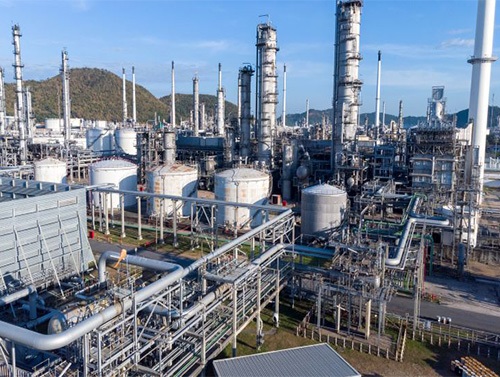
Chemical production areas can contain toxic, flammable, oxygen-displacement and VOC risks that vary by process state and location. A monitoring plan begins with target substances and credible release scenarios, then selects fixed and portable technologies for complementary roles.

HT-Nova gas detectors and connected monitoring can provide local alarms, trends and status information for the plant safety team.

Operational challenge

Operational challenge

Gas may not reach a poorly positioned detector, while humidity, poisoning, cross-sensitivity and sensor ageing can affect response. Alarm thresholds must connect to a trained action rather than exist as isolated numbers.

Operating workflow

Operating workflow

01

Map the risk

Identify target substances, emission points, occupied areas, ventilation and process states.

02

Select and place

Choose compatible sensing methods and locate fixed or portable instruments according to the release scenario.

03

Set the baseline

Commission the system with documented calibration, alarm logic and normal operating data.

04

Respond to change

Connect alarms to confirmation checks, plant communications and site response procedures.

05

Maintain performance

Review calibration, bump tests, sensor life, cross-sensitivity and trend data throughout operation.

Technology role

Technology role

Electrochemical, PID and other gas-sensing methods respond to different analytes and concentration ranges. Fixed detection provides continuous coverage at defined points; portable instruments support personal protection and investigation; IoT links device status and readings.

Technical boundaries

Technical boundaries

The case should identify target gases and certifications before naming a detector suitable for a zone. Monitoring reduces uncertainty but cannot guarantee that an accident is prevented, and it requires calibration, functional checks and lifecycle service.

Mission value

Mission value

01

Defined coverage

Sensors are selected and placed against credible release scenarios.

02

Actionable alarms

Every threshold connects to plant communication and response procedures.

03

Lifecycle readiness

Calibration, testing, sensor condition and maintenance remain visible.

Talk to an expert

Discuss your detection requirements.

Tell us about your environment, target substances and operational requirements. We’ll help map the right path.

Start a conversation