
Operational scenario

Emergency Response to an Unknown Chemical Release

An illustrative response scenario showing how perimeter monitoring, complementary field instruments and disciplined sampling can support the assessment of an unknown chemical release.

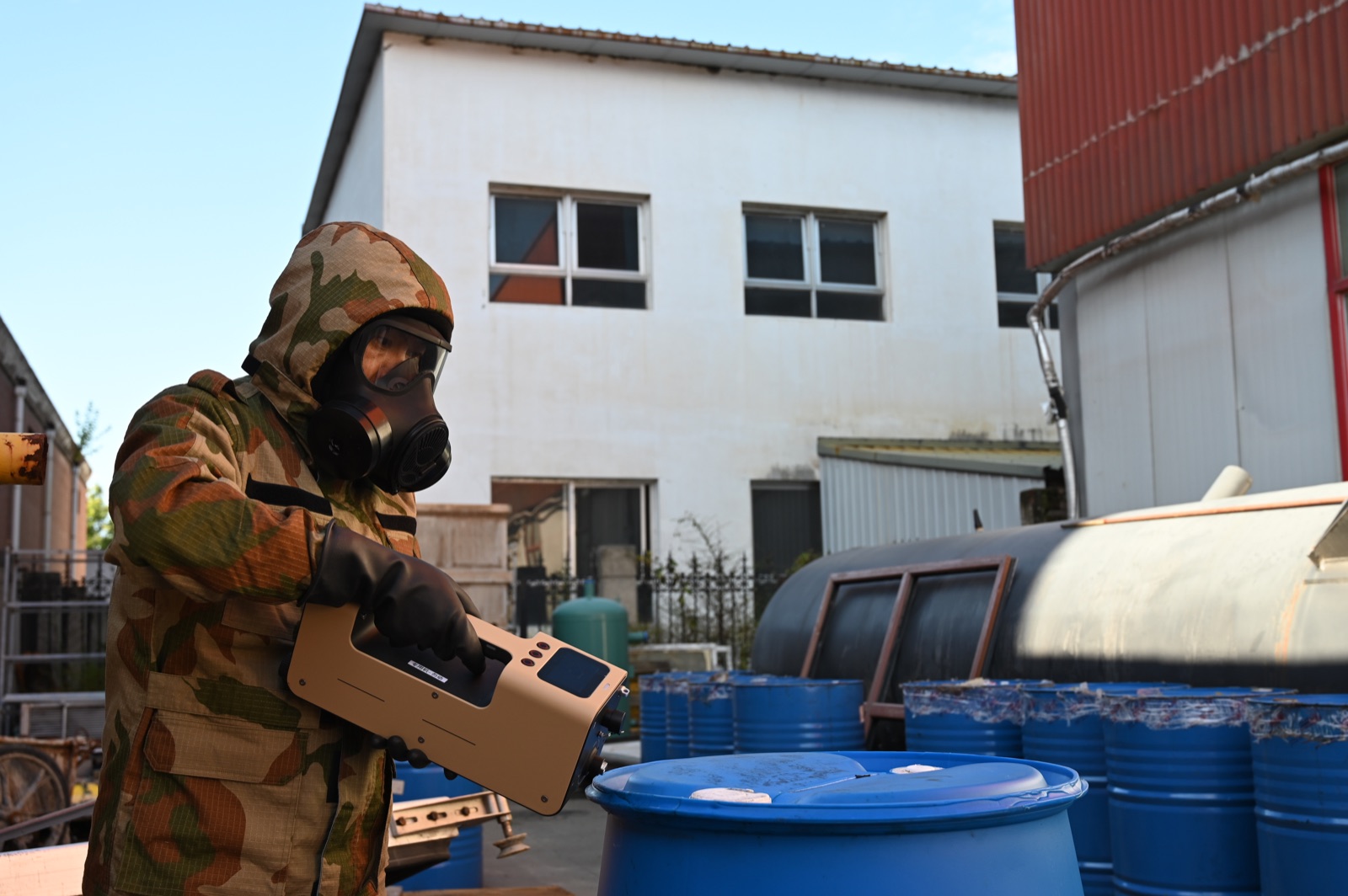
Hazardous-material responders conducting handheld gas screening at an industrial site
Upwind atmospheric screening within a controlled chemical-response perimeter.
Operational context

Emergency responders are called to an industrial facility after reports of an unusual odor or a possible chemical release. At the outset, both the identity and the extent of the release may be unknown, so the response needs information from more than one location and more than one method.

This illustrative operating scenario follows a procedure-led approach: establish a perimeter, collect atmospheric observations, use suitable portable instruments to characterize unknown liquids, solids or vapors, and provide information for decisions on evacuation, containment, sampling and specialist intervention. Measurements support those decisions; they do not independently declare an area safe.

Operational challenge

Characterize before approaching further

An unusual odor or visible release does not by itself establish the substance, concentration, source or extent of a hazard. Field teams need to reduce uncertainty without creating unnecessary exposure or disturbance.

Perimeter observations and complementary instruments can support a measured approach to the suspected source. The responsible organization determines protective measures, sampling and access according to its procedures and the available evidence.

Operating workflow

Unknown-release response workflow

01

Initial alarm

Responders collect the initial report and establish the operating context without assuming the cause.

02

Perimeter measurement

Multi-gas, PID or other appropriate tools collect observations at selected locations.

03

PPE decision

The responsible team selects protective measures according to procedures, conditions and the available information.

04

Identification

Suitable field methods support characterization of unknown liquids, solids or vapors where conditions allow.

05

Source investigation

Teams investigate the suspected source through a controlled, evidence-led approach.

06

Monitoring

Repeated observations help describe changing conditions and the effect of response actions.

07

Clearance decision

Responsible organizations use measurements with their standards and procedures when deciding whether further action is needed.

Technology role

Complementary chemical assessment

Multi-gas instruments, PID sensing, ion mobility spectrometry and Raman identification each contribute different kinds of information. The useful configuration depends on the suspected materials, environment, operating conditions and sampling plan.

No single field method resolves every unknown. Combining compatible observations with controlled sampling and specialist review supports a more defensible operational assessment.

Mission value

A layered chemical-response capability

01

Atmospheric assessment

Multi-gas and PID measurements can support a perimeter view of changing airborne conditions.

02

Field characterization

IMS and Raman methods can contribute information about selected unknown substances under appropriate conditions.

03

Location comparison

Measurements from multiple positions can help teams understand gradients and prioritize investigation.

04

Procedure-led follow-up

The information can support evacuation, containment, sampling and specialist-intervention decisions by responsible teams.

Technical boundaries

Technical boundaries

Zoning and measurement positions should account for wind, ventilation, terrain and changing process conditions. PID, electrochemical, IMS, Raman and GC methods answer different questions. Field screening supports protective action and sample selection, while definitive attribution may require a validated confirmatory method.

Talk to an expert

Discuss your detection requirements.

Tell us about your environment, target substances and operational requirements. We’ll help map the right path.

Start a conversation