
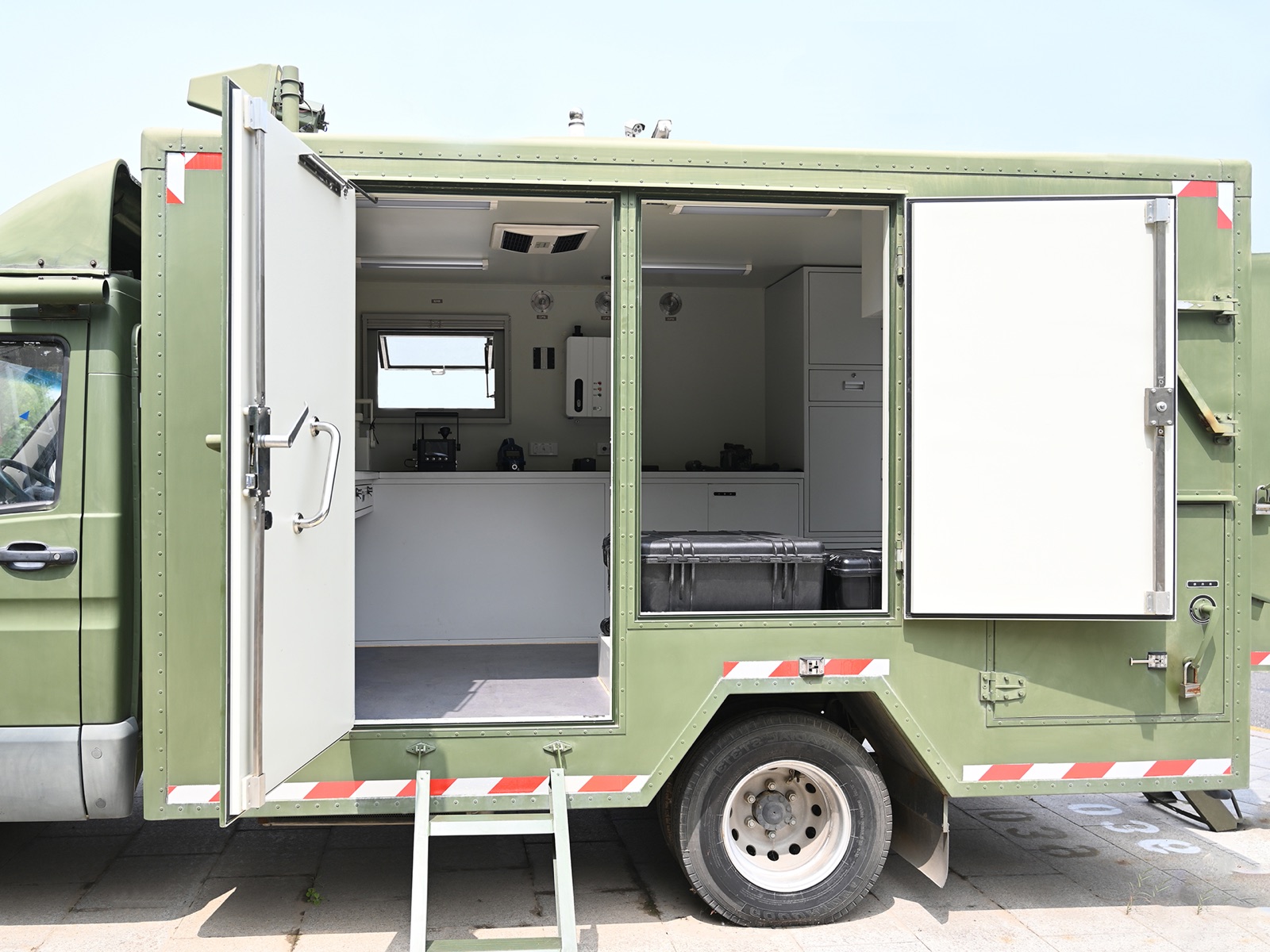
Operational scenario

Mobile Laboratory Deployment for On-Site CBRN Analysis

An illustrative scenario for bringing selected analytical capability closer to a controlled incident area and shortening the information cycle between collection, analysis and operational decision.

Analyst processing a documented sample in a mobile laboratory
A controlled mobile analytical workspace linking field samples with documented methods.
Operational context

Complex incidents may need more analytical capability than a field team can bring to the first point of contact. A mobile laboratory can move selected examination capability closer to the event while maintaining a controlled path from field screening and sampling to further analysis.

This illustrative operating scenario shows field teams conducting initial screening, transferring selected samples under the applicable procedures and returning analytical findings to the responsible decision-makers. A mobile laboratory complements, rather than replaces, the specialist facilities and quality requirements that a particular incident may require.

Operational challenge

Keep the analytical path close and controlled

The speed of a response can depend on how quickly field observations are turned into information decision-makers can use. But moving samples and instruments closer to an incident also requires clear control of handling, transfer, documentation and analytical scope.

A mobile laboratory helps organize that path near the controlled area. It operates within the responsible organization's sampling, quality and laboratory procedures.

Operating workflow

Field-to-laboratory workflow

01

Incident

The response organization establishes the incident context and analytical questions to be addressed.

02

Field screening

Portable technologies provide initial observations to guide selection of samples and follow-up.

03

Sampling

Trained personnel collect selected samples under the relevant procedures and documentation requirements.

04

Controlled transfer

Samples move to the mobile laboratory through an identified handling and transfer path.

05

Mobile analysis

Available methods are used within their intended scope to develop additional information.

06

Reporting

Findings are documented and communicated with their relevant method and operational context.

07

Operational decision

Responsible organizations use the information with their procedures to determine next actions.

Technology role

Selected capability close to the incident

A mobile laboratory can combine Raman assessment, GC or PID methods, biological sampling workflows and radiation instrumentation according to the mission. It is designed around the questions the field response needs to answer, not around a fixed product catalogue.

Selected methods, sample handling and reporting are governed by the operating organization. Where a particular result requires accredited, specialist or confirmatory analysis, the mobile workflow can support a controlled handoff rather than claim to replace it.

Mission value

A shorter information cycle

01

Field screening connection

Initial field observations can help select samples and analytical priorities.

02

Controlled sample pathway

Documented handling and transfer support an orderly link between field and laboratory activity.

03

Multi-method analysis

Raman, GC or PID, biological and radiation methods can be configured for selected tasks.

04

Decision support

Reported findings can return to the responsible command structure with relevant operational context.

Technical boundaries

Technical boundaries

The configured method must match the analytical question: GC separates compatible volatile compounds, while PID provides a broad ionizable-gas response and is not chromatographic identification. Quality control, blanks, calibration, chain of custody and safe sample handling remain essential. Accredited or specialist confirmation is retained where the decision requires it.

Talk to an expert

Discuss your detection requirements.

Tell us about your environment, target substances and operational requirements. We’ll help map the right path.

Start a conversation