
Operational scenario

UAV-Based CBRN Reconnaissance in a Hazardous Area

An illustrative scenario showing how an unmanned aircraft, detection payloads, communications and mapping can support initial CBRN reconnaissance while operators remain outside a potential hazard area.

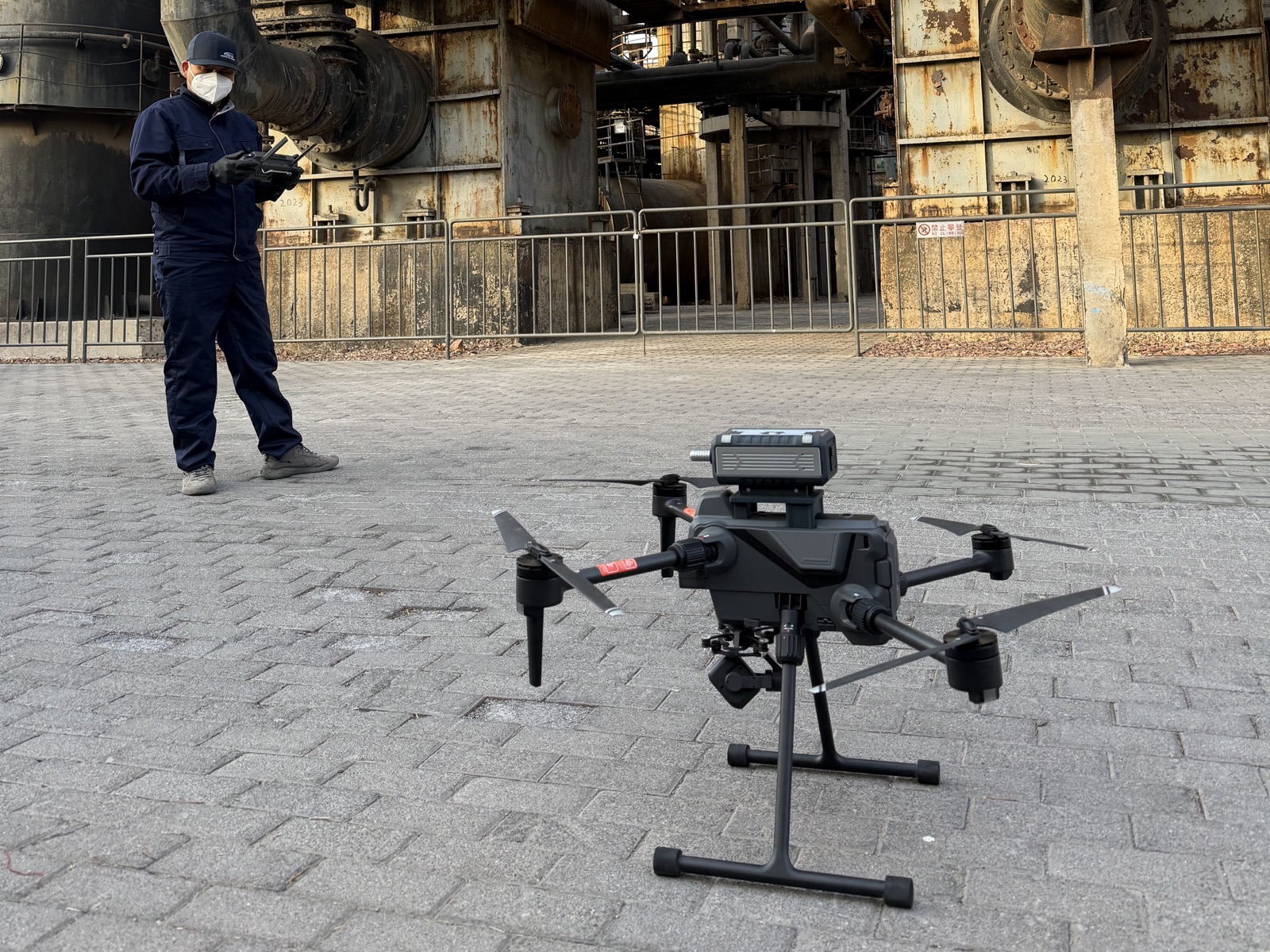
Industrial inspection drone carrying an environmental sensor payload
Unmanned reconnaissance carrying a mission-selected sensor payload above a controlled perimeter.
Operational context

Following a chemical or radiological incident, the affected area may not be suitable for personnel to enter immediately. This illustrative operating scenario shows an unmanned aerial platform carrying appropriate detection payloads on a planned survey route while operators work from a controlled position outside the potential hazard zone.

Sensor readings and location information can be transmitted to the response team and associated with geographic position. The resulting observations provide additional situational awareness before personnel enter the area and can support later sampling, identification and response activities under the responsible organization's procedures.

Operational challenge

Reconnaissance without early exposure

The first operational question after a suspected release may be whether the area can be approached safely enough for a field team to begin work. A route-based unmanned survey can extend observation into an area of concern while keeping the operator outside it.

The value comes from combining the reading, its position, the survey route and the time of observation. That context helps teams decide where a closer investigation may be warranted; it does not replace confirmation, procedures or professional judgement.

Operating workflow

Remote reconnaissance workflow

01

Remote deployment

Operators establish a controlled launch and recovery position outside the area of concern.

02

Survey route

A planned route covers priority corridors, boundaries or points of interest at an appropriate altitude and speed.

03

Detect

Selected payloads collect chemical, radiological or other monitoring observations appropriate to the task.

04

Geolocate

Readings are associated with location and time so the observations can be interpreted in context.

05

Map

The field picture can show where changes or higher readings appear across the surveyed area.

06

Investigate

Teams use the observations to plan proportionate follow-up, sampling or specialist assessment.

07

Response

Responsible organizations coordinate any next action through their established incident procedures.

Technology role

Air platform, payload and operating picture

An unmanned reconnaissance configuration brings together the air platform, selected chemical or gamma-detection payloads, communications and a location-aware information view such as HT-Vision. Bioaerosol monitoring may be included where the sampling and operating conditions make it appropriate.

The system is configured around the incident, airspace rules, environmental conditions and the mission authority. It contributes measurements and observations to the response system rather than making an autonomous operational decision.

Mission value

Integrated reconnaissance capability

01

Route-based coverage

Repeatable survey routes can help teams observe priority areas before a ground approach.

02

Chemical and gamma sensing

Appropriate payloads can collect measurements relevant to chemical or radiological concerns.

03

Location-aware observations

Linking readings with coordinates and time supports a more useful field interpretation.

04

Communications and HT-Vision

Live or recovered observations can be brought into a shared information view for coordinated teams.

Technical boundaries

Technical boundaries

Airframe endurance, payload mass, propeller wash, sampling height, wind and communications all affect the usefulness of airborne readings. A sensor response is not automatically an identification result, and flight data should be correlated with position, altitude and method conditions before directing ground confirmation.

Talk to an expert

Discuss your detection requirements.

Tell us about your environment, target substances and operational requirements. We’ll help map the right path.

Start a conversation